
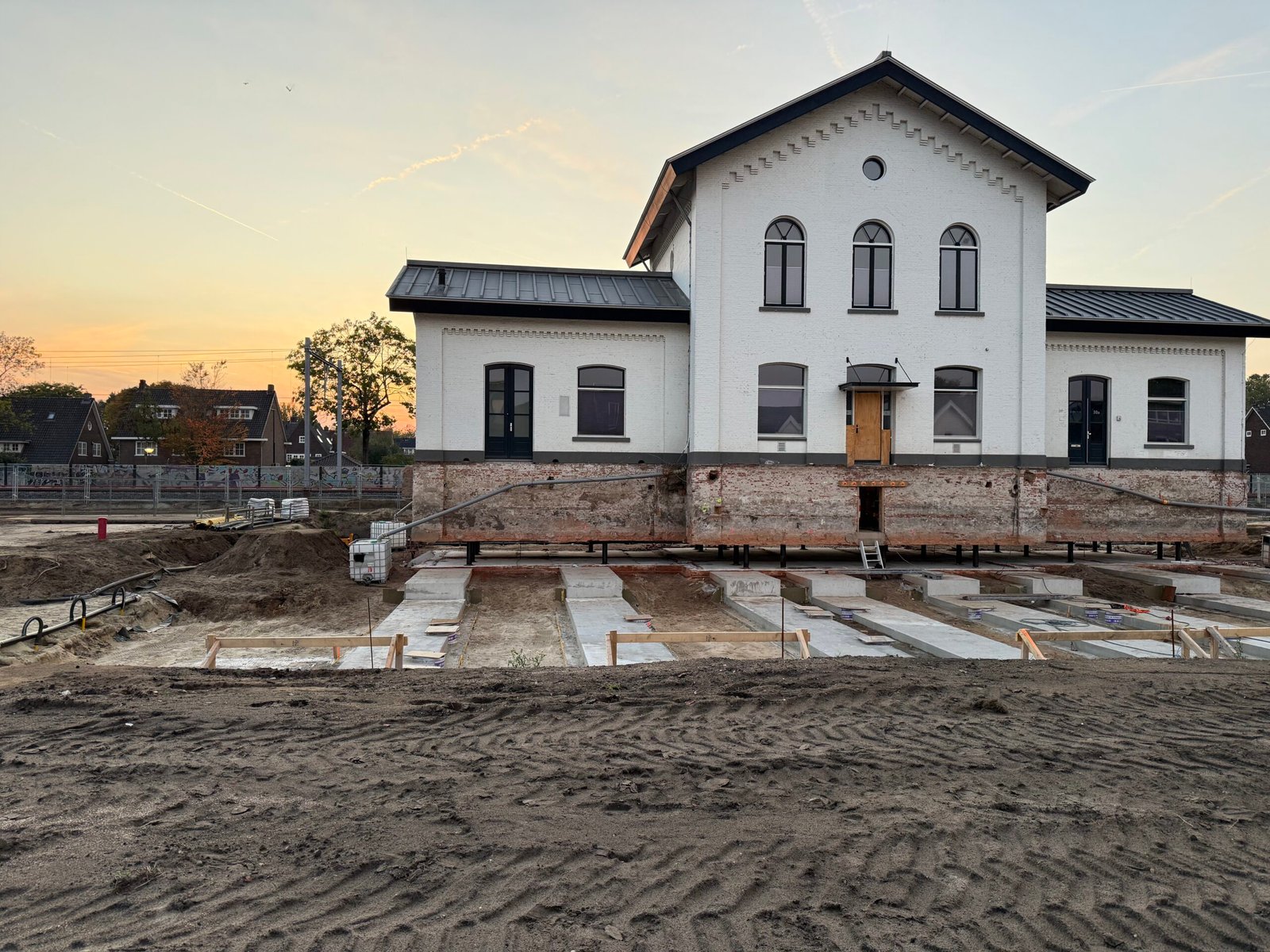
A major railway infrastructure upgrade is underway in Vught, the Netherlands. As part of the Vught Sunken Railway (Vught Verdiept) project, the existing railway is being expanded and partially lowered below ground level. This will eliminate several level crossings, improve traffic safety and reduce noise pollution for the surrounding area. A new, below-ground railway station will also be constructed.
The project is being carried out by Alliantie Vught Verdiept (AVV), a collaboration between ProRail, Van Hattum en Blankevoort and Boskalis Nederland.
One particularly remarkable aspect of the project is the relocation of Vught's historic station building. Due to the railway expansion, the existing building needs to make way for the new infrastructure. To preserve this historically significant structure, the entire building, including its existing basement, will be moved approximately 13 metres.
Vught's station building holds significant historical and cultural value. During the Second World War, the station played a role in the deportation of prisoners from Camp Vught to concentration and extermination camps. The building therefore serves as a tangible reminder of a tragic chapter in Dutch history.
Preserving the historic station building is an important part of the project. By carefully relocating the structure, this piece of history can be safeguarded while creating space for the future railway infrastructure.
Relocating the station building requires meticulous preparation and carefully controlled execution. First, the building is fitted with a temporary support structure, allowing it to be safely lifted and supported during the relocation process.
As shown in the photograph, the station building has already been lifted and is now resting on steel supports. It is a remarkable sight: the historic building is completely separated from its original foundation, ready for the next stage of its relocation.
Steel tracks are then installed beneath the building. Using specialised heavy-duty rollers, known as tank rollers, the structure is positioned on these tracks. Hydraulic jacks are subsequently used to slowly and carefully push the building towards its new location.
Throughout this process, structural stability, load distribution and the prevention of excessive deformation are essential. The relocation is scheduled for 30 October 2026, following a trial movement on 29 October.
CI-Engineers provides structural engineering expertise within Alliantie Vught Verdiept for both the construction of the new railway station and the relocation of the existing historic station building.
One of our structural engineers serves as Lead Structural Engineer for the Vught station project area. In this role, he is involved in the structural engineering and technical development of the new station.
In addition, he acts as Lead Structural Engineer for the relocation of the historic station building, with a particular focus on structural safety throughout the various construction and relocation stages.
Through these activities, CI-Engineers contributes to future-proof railway infrastructure while helping preserve an important piece of Dutch heritage.
Opdrachtgever: ProRail
Construction consortium: Alliantie Vught Verdiept